
In the previous article, we built up a picture of how data travels through a copper cable voltage levels, encoding tricks, error correction. It works. It works well, actually.
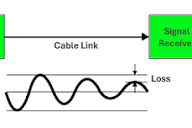
But copper has a hard limit. The further your signal travels, the more it weakens. Electrical resistance eats away at the signal. Interference from nearby cables, power lines, and basically any electromagnetic source starts to corrupt the data. By the time you’re a few hundred meters out, you need to amplify the signal. And every time you amplify, you’re also amplifying the noise that’s built up along the way.
For your house, your office, a data center floor copper is fine. For crossing the Atlantic? Something else was needed.
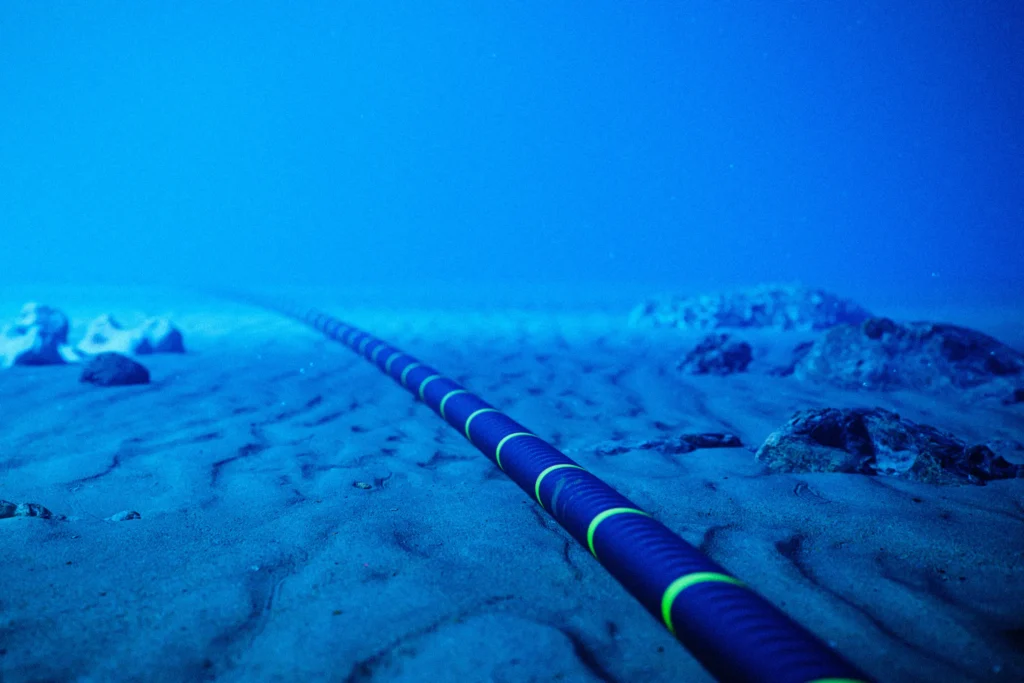
Light Doesn’t Have the Same Problem
The core idea behind fiber optics is simple: instead of using voltage to represent bits, use light.
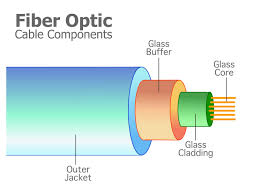
A fiber optic cable is a thin strand of glass sometimes thinner than a human hair surrounded by a protective cladding. When light enters one end, physics keeps it trapped inside the glass through a phenomenon called total internal reflection. The light bounces off the inner walls at specific angles and travels the length of the cable without escaping. At the other end, a photodetector reads the light pulses.
To encode data, the transmitter modulates light intensity: a pulse of light means 1, no pulse means 0. More sophisticated systems use multiple intensity levels — the optical version of PAM4 we covered in the previous article.
And here’s the thing about light in glass: it barely loses energy. A fiber optic signal can travel hundreds of kilometers before it needs to be amplified. Compare that to copper’s few hundred meters. That’s not a marginal improvement — it’s a different category of technology.
What Actually Connects Continents
The internet isn’t a cloud. It’s not satellites (mostly). It’s a web of cables on the ocean floor, and almost all of them are fiber optic.
These submarine cables are engineered to survive conditions that would destroy most equipment. The deep ocean is cold, dark, and under crushing pressure. A cable that breaks 4,000 meters below the surface is not easy to fix. So they’re built with multiple layers of armor near the coasts — where anchors and fishing gear are the main threat — and progressively lighter construction in the deep water where the main risk is just… time.
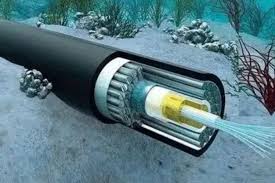
Each cable contains several fiber strands bundled together. And over each fiber, multiple wavelengths of light can be transmitted simultaneously each wavelength acting as a separate data channel. This technique is called wavelength-division multiplexing, and it’s why a single cable can carry enormous amounts of data at once.
The cables get laid by specialized ships. It takes weeks. When one breaks which does happen a repair ship has to go out, grapple the cable up from the seafloor, splice it, and lower it back down. It’s one of the most physically demanding and invisible pieces of infrastructure the internet depends on.
Next time you load a webpage from a server on another continent, something literally physical at the bottom of the ocean made that possible.
Radio: The Third Option
Copper and glass aren’t the only ways to move bits. You can also do it through the air.
Radio transmission works by creating an electromagnetic wave the carrier wave and then modifying its properties to encode data. There are three properties you can play with:
Frequency. Change how fast the wave oscillates to represent different bit values. This is FM, the same principle your car radio uses.
Amplitude. Change how tall the wave is. Bigger wave for a 1, smaller for a 0.
Phase. Shift the timing of the wave. Instead of the wave peaking where you’d expect, it peaks at a different point.
Modern wireless systems don’t pick just one of these they combine them. Wi-Fi 6, for instance, uses a scheme called 1024-QAM that encodes information in both amplitude and phase simultaneously. Each “symbol” the radio transmits can carry 10 bits at once. That’s the reason modern Wi-Fi is fast enough to stream 4K video.
But radio has problems copper and fiber don’t. The signal spreads in every direction, not just toward your receiver. Other devices using the same frequencies interfere with yours. Walls, furniture, and even your own body absorb or reflect signals. The same math applies — you’re still encoding bits as physical variations but radio demands a much thicker stack of engineering on top of it to deal with a messier physical environment.
For this reason, radio tends to be used for the last short stretch: from a router to your laptop, from a cell tower to your phone. The backbone of the internet the long-haul, continent-to-continent infrastructure stays physical.
Why Not Just Use Satellites?
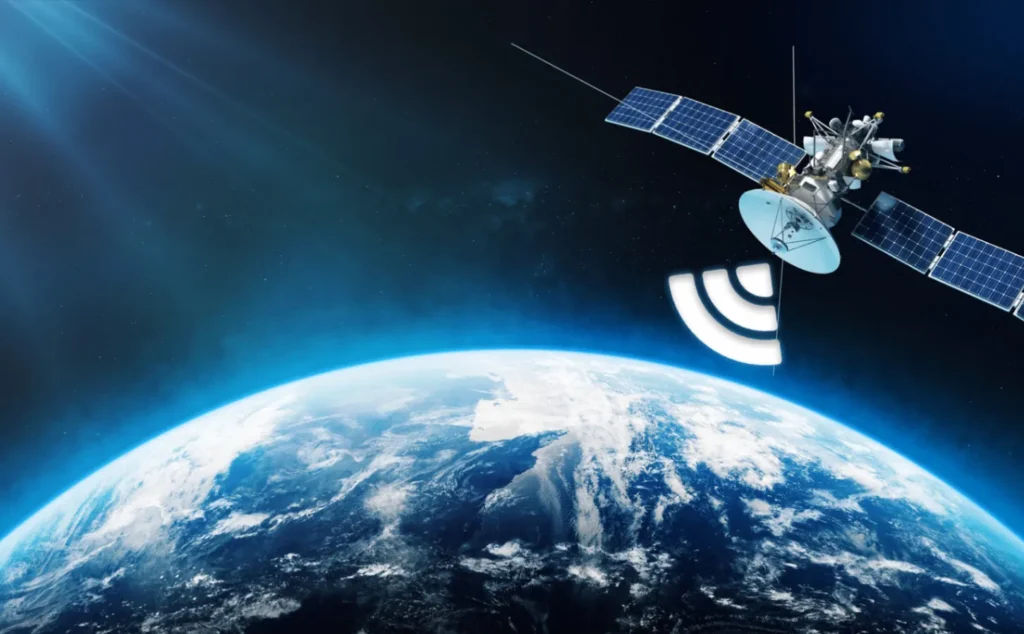
You might wonder: if satellites can orbit the Earth, why not just route all internet traffic through space?
Some traffic does. Starlink and similar services have made satellite internet genuinely usable in remote areas where no cable reaches. But even Starlink’s low-orbit satellites add latency that fiber doesn’t have. Light travels faster in a vacuum than in glass, technically but the distance it has to cover going up to a satellite and back down is still much greater than following a cable along the seafloor.
For most of the world’s internet traffic, cables win. They’re faster, higher capacity, and once you’ve built them, cheaper to operate. Satellites fill in the gaps.
How Each Medium Is Used in Practice
The choice of medium isn’t random it follows the shape of the problem:
For long-distance, high-capacity links continent-to-continent, country-to-country, or city-to-city backbone connections fiber optics are the default. No other medium comes close for the combination of distance and throughput.
For local connections inside buildings, server rooms, and short outdoor runs, copper is still common. It’s cheaper to install, the hardware is simpler, and the distance limits don’t matter at that scale.
For connecting end users to the network your laptop, your phone, devices you carry radio is often necessary. You can’t run a cable to every moving device.
Most internet traffic crosses all three at some point in its journey.
How Each Medium Is Used in Practice
The choice of medium isn’t random it follows the shape of the problem:
For long-distance, high-capacity links continent-to-continent, country-to-country, or city-to-city backbone connections fiber optics are the default. No other medium comes close for the combination of distance and throughput.
For local connections inside buildings, server rooms, and short outdoor runs, copper is still common. It’s cheaper to install, the hardware is simpler, and the distance limits don’t matter at that scale.
For connecting end users to the network your laptop, your phone, devices you carry radio is often necessary. You can’t run a cable to every moving device.
Most internet traffic crosses all three at some point in its journey.
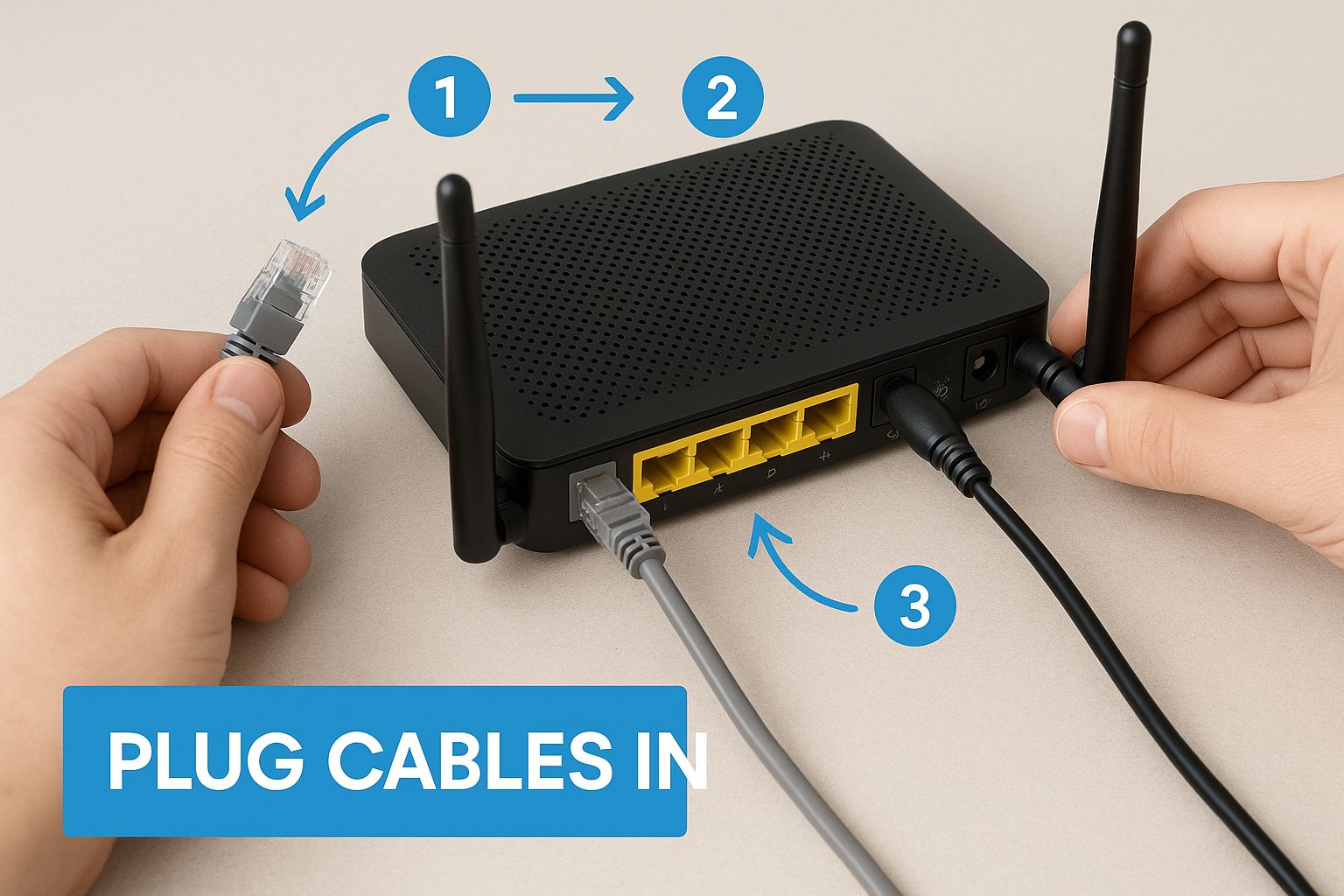
Next in this series: What Actually Happens When You Plug a Cable Into Your Router.
One thought on “Why Fiber Optics Took Over the Internet (And What’s Actually at the Bottom of the Ocean)”