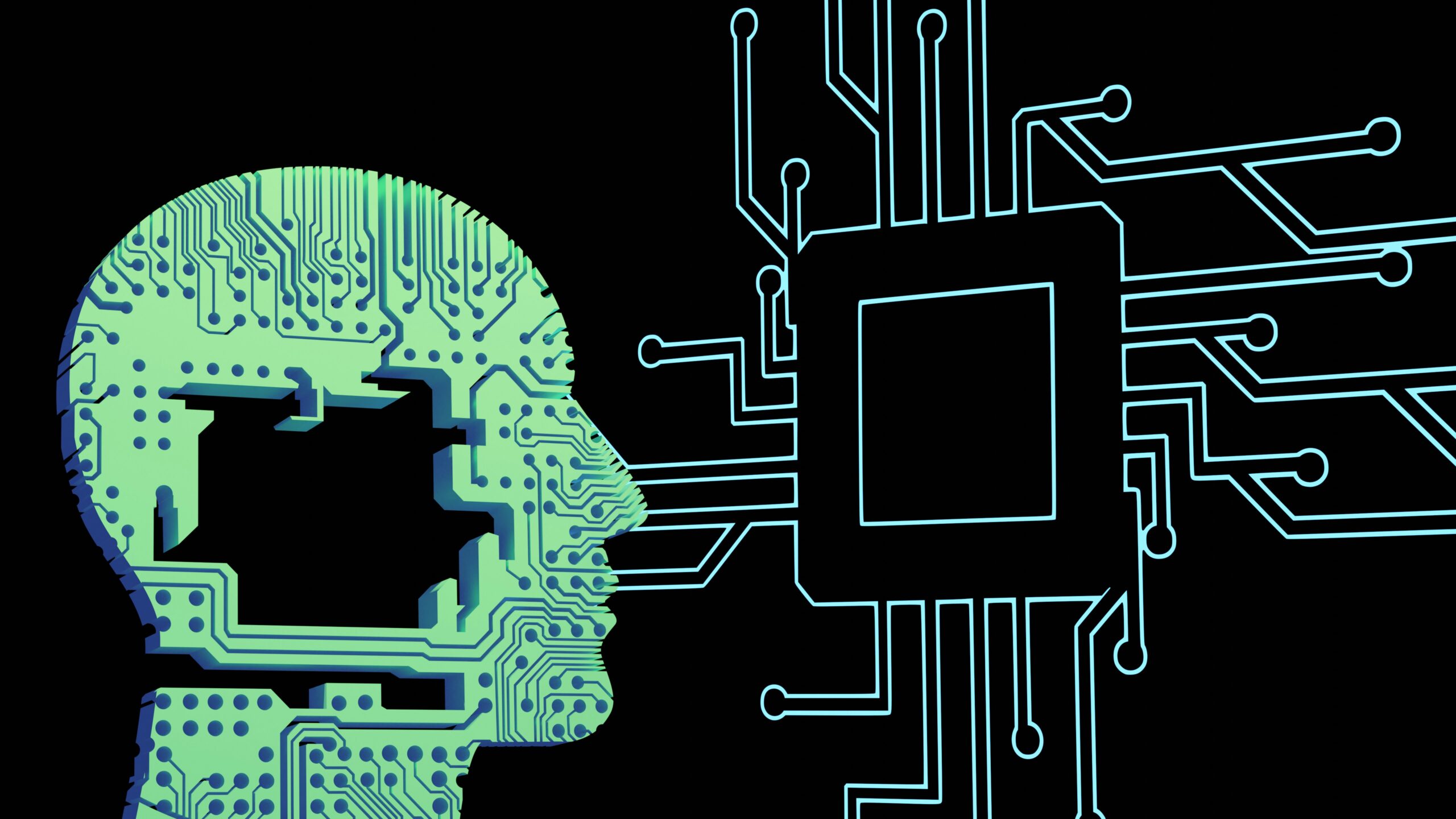
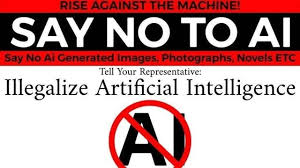
Humans have been constantly evolving since the discovery of fire and the development of speech hundreds of thousands of years ago. Our ability to speak emerged as early ancestors transitioned from simple vocalizations and gestures to complex communication. That spoken foundation eventually drove the creation of writing so societies could record information across time and space. Scientists now understand these are actually separate systems in the brain—one did not replace the other, they layered upon each other, making us more capable, not less.
history. The control of fire transformed early hominins into advanced thinkers, expanding our diets, fueling brain growth, and driving social evolution. Today, fire—in controlled forms—remains the fundamental energy source powering our electricity, transportation, and global industry. Fire made us human, and if we can distinguish ourselves from other animals, it is mostly because of fire. If you want to understand how fire made us human, read this article from Keap Candles: The Fire Inside: How Fire Made Us Human and What We Can Learn From It Still.
Why am I talking about this? Because I want to make it clear from the beginning: we started evolving millions of years ago, and we are still evolving. The panic you feel about AI? It’s not new. It’s the oldest feeling in human history.
The Pattern We Refuse to See
April 1986, Washington, D.C.
John Saxon, a math teacher, and about 20 other teachers picketed outside the National Council of Teachers of Mathematics annual meeting. Protesters carried signs reading “The Button’s Nothin’ ‘Til the Brain’s Trained.” They worried that premature reliance on electronic devices would cripple students’ abilities to perform basic mental arithmetic and understand fundamental mathematical concepts.
Can you imagine? Today we have calculators in our phones, and sometimes for simple math, we use them. The world did not end. Children did not stop learning math—they learned different math. They learned to think about what the calculator should calculate, not just how to crunch the numbers themselves.
The technology: mechanized looms and automated textile machinery introduced during the Industrial Revolution.
The conflict: skilled artisans, weavers, and textile workers saw these machines not merely as tools, but as existential threats to their livelihoods. Because factory owners used machines to lower wages and hire unskilled labor, workers organized raids to smash the machinery. The British government brutally suppressed these protests with military force and the 1812 Frame-Breaking Act, which made destroying machines punishable by death.
1980s: The Neo-Luddite Movement, Global
The technology: early personal computers, automated factory robotics, and industrial mass production.
The conflict: philosophers and activists revived the Luddite spirit, protesting against the environmental degradation, dehumanization, and job losses caused by expanding industrialism and early computerization.
I could continue. There is so much history like this. The printing press was going to destroy the church. The telephone was going to destroy face-to-face conversation. The internet was going to destroy our attention spans. Some of these fears had grains of truth—but the destruction never came the way the panicked predicted. Instead, transformation came. Slow, painful, uneven transformation. But transformation nonetheless.
The Uncomfortable Truth About AI
We have learned from the past, or at least we should have: you cannot fight new technology. You better join, or you will be left behind. This is not a Silicon Valley platitude. This is the lesson of fire, of the printing press, of the loom, of the calculator, of the personal computer. Every single time, the people who adapted found new ways to be valuable. Every single time, the people who fought it lost. Not because they were wrong morally, but because they were wrong strategically. You cannot shame the tide into retreating.
Will AI fail? Maybe. Maybe not. But to be honest—and I want to be honest with you, because this article started with a lie in the title to get your attention—with all the money injected into AI, this thing will be part of us forever. It is not a product. It is infrastructure. It is not a company. It is a layer of reality now. You do not ban electricity because some people get electrocuted. You learn the safety rules and you build a better grid.
The Question We Should Be Asking
“Hard times create strong men, strong men create good times, good times create weak men, and weak men create hard times.”
AI is disruption. It is uncomfortable. It is frightening. It is forcing us to relearn what “work” means, what “skill” means, what “intelligence” means. And that relearning is painful. But the alternative—the comfortable path of banning, resisting, pretending we can return to 2019—is a lie. It is the weak man’s fantasy of strong times.
Fire did not make us human because it was safe. It made us human because we learned to control what could destroy us. AI is our next fire. Not our enemy. Our test.
What “Joining” Actually Means
But the blanket ban? The moral panic? The nostalgic fantasy of returning to a pre-AI world? That is not resistance. That is surrender dressed up as principle. It is choosing to become irrelevant and then calling it integrity.
The Fire Inside
AI is not the end of that story. It is the next paragraph. And like every paragraph before it, it will be written by the people who show up to write it—not by the people standing outside with picket signs, no matter how righteous their anger, no matter how understandable their fear.
The title of this article was a lie. I do not think AI is bad. I do not think we should ban it. I think we should be honest about what it is, what it costs, and what it demands of us. I think we should teach our children not to fear the fire, but to respect it, understand it, and eventually—inevitably—learn to carry it forward.
Because if everything breaks, I want my children to know how to start the fire again. Not because they never touched it. But because they learned to master it.