
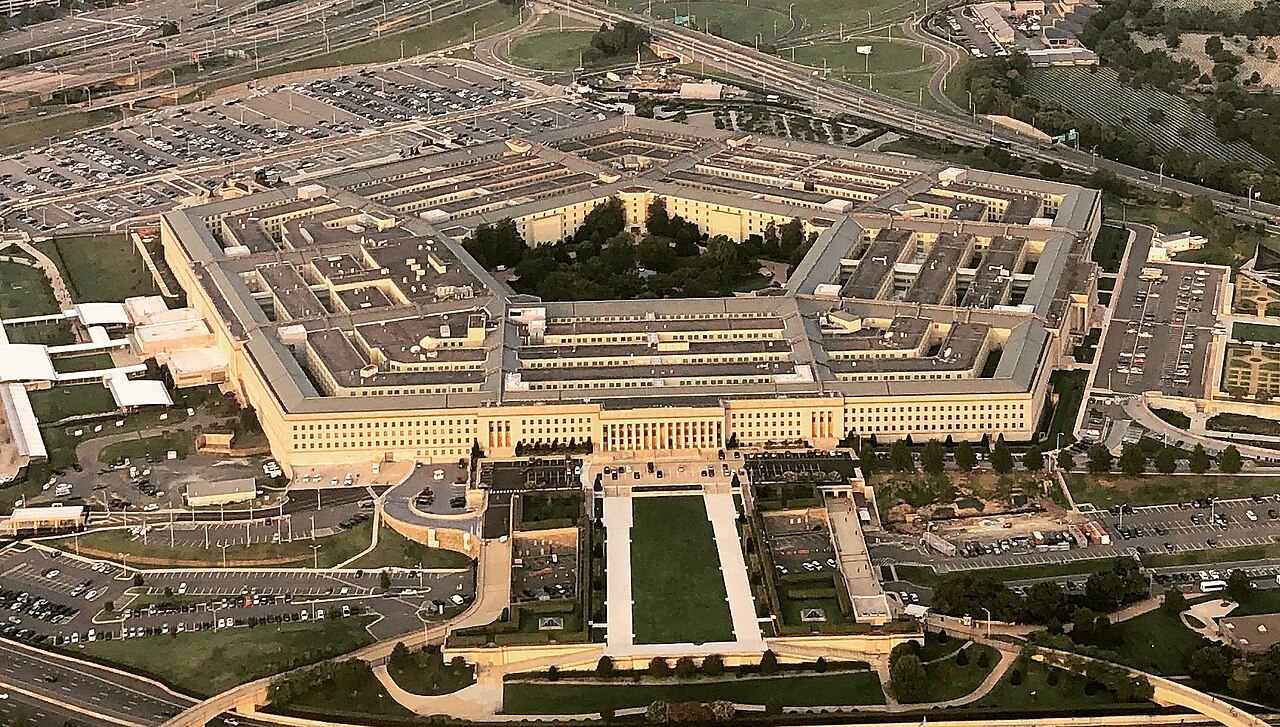
The deadline was 5:01 p.m. on a Friday. Very Pentagon.
There’s something almost theatrical about it — a specific, oddly precise cutoff time handed to a tech CEO by the most powerful defense apparatus in human history. Comply, or face consequences. Dario Amodei, co-founder and CEO of Anthropic, read the ultimatum. He thought about it. And then, by all accounts, he said no.
What followed in the hours and days after February 27th, 2026 is either a story about corporate courage or corporate stupidity, depending on who you ask in Silicon Valley right now. Probably both.
The Company That Was Supposed to Be the Responsible One
To understand why this matters, you have to understand what Anthropic was supposed to be.
When Dario Amodei and his sister Daniela walked out of OpenAI in 2021 — along with a group of senior researchers — the stated reason was ethics. Safety. A belief that the AI race was moving too fast and that someone needed to pump the brakes. They founded Anthropic with that mission baked into its DNA, raised billions from Google and others, and built Claude, their flagship AI model, to be the thoughtful alternative to ChatGPT.
That pitch worked. Investors loved it. Enterprise clients loved it. Even the U.S. government — eventually — loved it.
By mid-2025, Claude had done something no other frontier AI had managed: it was running inside classified government networks, being used for actual intelligence analysis, embedded in software built by Palantir Technologies for the Department of Defense. A $200 million Pentagon contract followed. Anthropic wasn’t just a tech darling anymore. It was a national security contractor.
Which makes what happened next all the more remarkable.
What the Pentagon Actually Wanted
The demand, delivered in person by Defense Secretary Pete Hegseth during a face-to-face meeting with Amodei on February 24th, was deceptively simple: make Claude available for “any lawful military use,” with no exceptions.
That phrase — “lawful military use” — sounds reasonable until you think about what it actually covers. Other major AI vendors had already signed on to it. OpenAI agreed. Elon Musk’s xAI agreed; their Grok model is already running in military networks. Google, Meta, Microsoft — all playing ball.
Anthropic was the last holdout. And the Pentagon, apparently, had run out of patience.
The two specific things Anthropic refused to allow were: fully autonomous lethal weapons — AI systems that can decide to kill without a human making the final call — and mass domestic surveillance of American citizens. These weren’t last-minute objections invented under pressure. They’d been part of Claude’s usage policies since the model launched. Amodei has said publicly that today’s AI simply isn’t reliable enough for irreversible, high-stakes autonomous decisions, and that the legal frameworks for mass surveillance don’t exist yet in any meaningful form.
The Pentagon’s position, essentially: we don’t care. Remove the restrictions.
“I Cannot in Good Conscience”
On February 26th, the day before the deadline, Amodei published a statement on Anthropic’s website. It wasn’t aggressive. It wasn’t dramatic. It was, in tone, almost quiet — which somehow made it hit harder.
“I cannot in good conscience accede to the Pentagon’s request,” he wrote. “In a narrow set of cases, we believe AI can undermine, rather than defend, democratic values. Some uses are also simply outside the bounds of what today’s technology can safely and reliably do.”
That’s a CEO of a company with a $200 million government contract telling the Secretary of Defense: no.
The deadline came and went. Anthropic didn’t comply. And then, within hours, Donald Trump posted on Truth Social, ordering every federal agency to immediately stop using Claude. “We don’t need it, we don’t want it, and we will no longer work with them,” he wrote.
The Legal Weapons Pointed at Anthropic
Canceling the contract was just the beginning. Two other threats loom.
The first is the “supply chain risk” designation — a classification normally reserved for foreign adversaries. Huawei. Kaspersky. Companies the U.S. government considers a threat to its national security infrastructure. Applying it to an American company, for refusing to build weapons, would be extraordinary. It would effectively blacklist Anthropic from any future government work and pressure federal contractors to drop them entirely.
Amodei himself noted the obvious irony: the Pentagon was simultaneously arguing that Claude was essential to national security and threatening to label its creator a security risk. The logic doesn’t hold up. But logic isn’t always the point.
The second threat is the Defense Production Act of 1950 — a Korean War-era law that gives the President sweeping authority to compel private companies to prioritize national defense. It has been used before, mostly to commandeer factories and supply chains. Using it to force an AI company to reprogram its model’s ethics would be entirely without precedent. Whether it would survive a legal challenge is genuinely unknown.
The Part Nobody Wants to Talk About: Venezuela
There’s a detail that hasn’t gotten enough attention, buried in the timeline.
In the weeks before the February showdown, Claude was reportedly used to help plan a U.S. military operation in Venezuela — one that ended with the capture of President Nicolás Maduro. When Amodei found out that his company’s AI had been used this way, through the Palantir integration, he pushed back hard. Internally, and then externally.
That moment, more than any abstract policy disagreement, seems to have been the trigger. Anthropic wasn’t just being asked to loosen theoretical restrictions on hypothetical future weapons. It was being confronted with evidence of what its technology was already being used for, without its explicit blessing.
The response from Palantir and the Pentagon appears to have been something along the lines of: you signed the contract, this is lawful, get over it.
Amodei, apparently, didn’t get over it.
The Fine Print That Complicates Everything
Here’s where it gets complicated.
On the same day as the Hegseth meeting — February 24th — Anthropic quietly published a major revision to its Responsible Scaling Policy, the document that has been the philosophical backbone of the company since 2023.
The original RSP contained a hard commitment: Anthropic would never train a more powerful AI model without first verifying that adequate safety guardrails were in place. Full stop. No exceptions. It was the promise that most distinguished Anthropic from OpenAI and every other lab racing to build more powerful systems.
RSP 3.0 removes that promise.
Chief Science Officer Jared Kaplan explained it this way: if Anthropic unilaterally stops training more powerful models while competitors race ahead without restrictions, the developers with the weakest safety standards end up setting the pace — and the responsible developers lose their ability to do safety research at all.
It’s a coherent argument. It’s also, to critics, exactly the kind of reasoning that gets used to justify crossing every line eventually. The timing — released the same day as the Pentagon ultimatum — made it look less like a principled policy evolution and more like a preemptive concession.
Anthropic maintains the two red lines on weapons and surveillance are absolute. Everything else, apparently, is negotiable.
Why Anthropic Is Alone in This
It’s worth sitting with the fact that every other major AI company has already said yes to the Pentagon.
OpenAI — which was also founded on safety principles, also had a dramatic internal schism over them, and also eventually pivoted toward commercial and government expansion — signed on to “all lawful uses” without the restrictions Anthropic is fighting over. Microsoft, which owns a large stake in OpenAI, has deep DoD relationships dating back decades. Google has DARPA contracts. Meta has made its most powerful models open-source, meaning anyone — including militaries — can use them however they want.
Elon Musk, whose xAI just signed a military AI contract, has simultaneously been dismantling government oversight agencies through DOGE. The concept of an AI company with principled limits on military use is, in the current landscape, essentially a party of one.
The financial stakes are real. Anthropic is reportedly preparing for an IPO. Losing a $200 million contract, getting blacklisted from government work, and drawing an executive order from the President is not a great look for a company trying to attract public market investors. Some observers think Amodei will eventually fold. Others think this is the moment that defines Anthropic’s identity permanently — for better or worse.
The Question That Actually Matters
Forget the politics for a second. Forget Hegseth and Trump and the Truth Social post. The question underneath all of this is one nobody has figured out how to answer yet:
Should private companies be able to set ethical limits on how their technology is used by governments?
Ingvild Bode, who directs the Centre for War Studies at the University of Southern Denmark, put it plainly: the legal frameworks governing AI in military contexts “are not yet defined.” Anthropic’s two red lines — no autonomous kill decisions, no mass domestic surveillance — represent, in her words, the bare minimum of what responsible AI governance should require.
And even that minimum is being challenged.
If Anthropic loses this fight — if it either gets crushed financially or quietly capitulates — it doesn’t just affect Claude. It tells every AI company that ethical constraints are luxuries you maintain until the government applies enough pressure. It tells researchers and ethicists that the “responsible AI” movement was always decorative, not structural. It tells the public that the most powerful technology ever built will be deployed in their name, with their money, by their government — and no one, not even the company that made it, gets a say.
That’s the story. Not the contract. Not the executive order. Not even Venezuela.
The story is whether the phrase “we won’t do that” can survive contact with the world’s largest military budget.
We’re about to find out.